February 1, 2026
Some Background
Until few years ago, mobile robots have been the realm of research, special applications (moon rovers), robot competitions (FIRST, VEX), industrial labs (Asmio – Honda) and interested hobbyists. There is of course a much longer history of mobile robots. A movie example is Maria from ‘Metropolis’ in 1927 (History of robots – Wikipedia). A functioning example is ‘Eric’ which was constructed to open the Exhibition of the Society of Model Engineers at London’s Royal Horticultural Hall in 1928 (Eric (robot) – Wikipedia). The idea that mobile robots would carry out work done by humans is also not new as illustrated in the 1929 Le Petit Inventeur article (1928 – Eric Robot – Capt. Richards & A.H. Reffell (English) – cyberneticzoo.com).
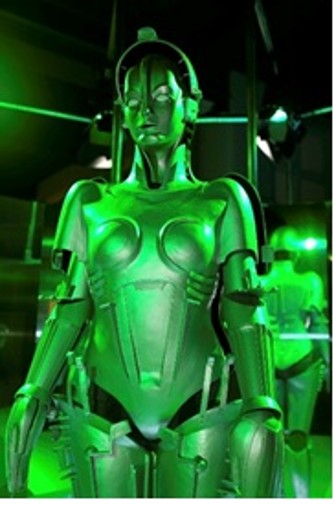
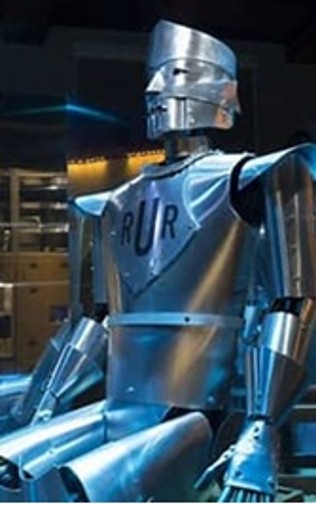
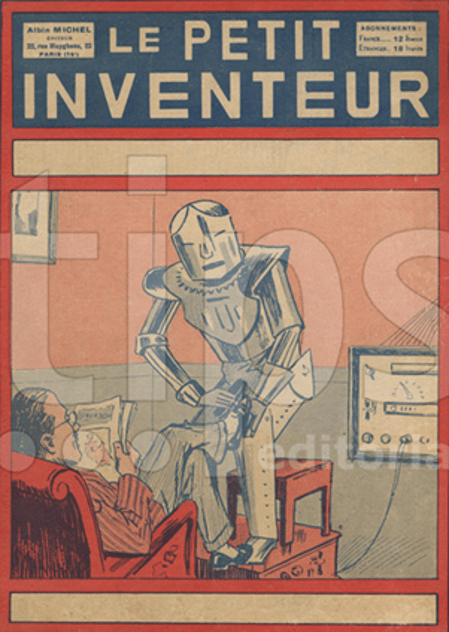
My interest in mobile robots has been from building or buying hobbyist robots for classes for middle and high school students and participating for a number of years with FIRST Robotics teams. These included robots using LEGOs to the 120 pound constructed robots built for FIRST Robotics competition. The FIRST Robotics robots are a combination of autonomous and teleoperated functions and annually are uniquely designed to meet the requirements of the competition rules. This interest evolved to preparing for and teaching an engineering course on mobile robots for university continuing education.
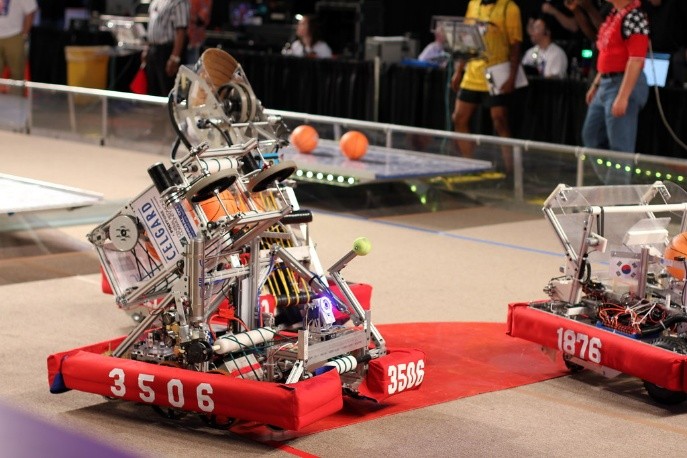
There are a number of important/essential contributors to the evolution toward today’s mobile robots.
- The development and application of fixed robots for manufacturing. This development has resulted in continuing advances in motors, servos, hardware configurations, controllers and computer functions which lay the groundwork for mobile robot advances.
- The rapid advances in machine learning (artificial intelligence) methods including Large Language Models, neural networks and model training functions.
- The development of small, relatively inexpensive computers that are capable of running control, navigation and AI algorithms including large language models.
- Very large investments by companies and governments, particularly China, in mobile robot development.
- Increasing actual and expected application of mobile robots in a wide variety of business processes (farming, warehousing, assembly, security, medical), personal care and the military.
As interest in mobile robots and the reality of their rapid increase in capability, vendors of research, educational and hobby robots have also improved the functionality of their products. This includes AI functions for object and face recognition, navigation functions, integration of large language models and motion control. These robots utilize the latest computing technology (Nvidia Jetson Orin NX) and navigation sensors (LIDAR and stereo cameras), Many are in the $500 to $1500 price range. While education and hobby products have rapidly increased their capabilities, some industrial/commercial mobile robot providers have developed products which also are accessible for the education, hobby and research lab market. Two specific examples are the Unitree GO quadped and the Unitree G1 humanoid robot. Still expensive but possible.
Why This Blog On Mobile Robots
I have spent a lot of time working on mobile robots. This includes building mobile robots the size and performance of the FIRST Robotics robots as well as many smaller ones. Much more time has been spent programming the various computers used and more recently using primarily Anthropic’s Sonnet 4.5 (Claude) for programming and education. Besides the mobile robots built I’ve purchased a number of the more advanced education/hobby robots which include essentially all the capabilities of industrial/commercial robots. My objectives in putting some of what I’ve built, bought and learned into a blog are:
- To document some of the basic information I’ve accumulated for my own use as future reference
- To (I hope) save some time for readers who are interested in mobile robots by providing information on things I sometimes spent hours trying to understand and apply
- To learn from others their experiences
At this point I don’t know what sequence I will be using for documentation. I’ll start by describing some of the robots I have. As caveats for the material provided:
- I claim no unique knowledge; I’m sure a lot of what I spent much time on others already know
- Any code/script/commands provided are ‘as is’; I can say that what is provided worked at least once on my computer system and for the robots I have
- I have spent time working to understand the operating instructions for many robots from a number of vendors; there have been problems with documentation and code, some of which of my own making and some are vendor issues; as these are discussed it is not to be critical of the vendors; many of the robots are complicated systems and getting everything right is no small task
Topics, Mobile Robots, Components and Software to be Discussed
A list of the mobile robots I have is given in Table 1. All of these have run at sometime. They use computers ranging from the Arduino Uno to the Jetson Orin NX. There are many controllers used. Most programming is in Python. Other languages are Arduino and graphical (like Scratch). The Python work is done with one of the Ubuntu versions. Many of the more recent robots use ROS2 for control and Gazebo for simulation. An objective in preparing the most recent course on mobile robots was to have an illustration of many/all the different types of locomotion (Ackerman steering, Mecanum Steering, tank steering … tracks, wheels … different suspension systems). The application of machine learning / artificial intelligence is also a part of the operation of a number of the robots. I have done a good deal of work with quadrotors/drones (mobile robots) and will discuss them. I’ve done nothing with water-based robots. The robots listed represent work over about 15 years. Some early ones are still applicable although in some cases the computers and controls used are no longer supported (most of these have been replaced by newer hardware). A few are more in the RC car category and are included as they represent a specific type of suspension or locomotion.
| No. | Robot Name | Description | Computer | Locomotion | Date Built / Purchased |
| 1 | Unitree GO2 | Quadped with LIDAR, phone app | Proprietary | 4 legs, Parasagittal configuration | 7/2025 – Purchased |
| 2 | HiWonder JetAuto | Arm, stereo camera, LIDAR, ROS2, phone app | Jetson Orin Nano | 4 wheels, Mecanum | 6/2024 – purchased |
| 3 | NQD Robotic Dog | RC, unique drive system | None | 8 Mecanum wheels in 4 sets of 2, tank steering | 8/2025 – purchased |
| 4 | Redcat Racing Ridgerock 1:10 | RC, 3 all wheel steering options, suspension | None | 4 wheel steering | 9/2025 – purchased |
| 5 | SunFounder GalaxyRVR | Rocker suspension, 6 wheel drive | Arduino Uno | 6 wheels, tank drive | 6/2025 – purchased |
| 6 | Hiwonder MentorPi | Ackerman steering, ROS2, stereo camera, LIDAR, phone app | RaspberryPi5 | 4 wheels, rear wheel drive, front wheel steering | 4/2025 – purchased |
| 7 | Yahboom MicroROS | LIDAR, microROS2, virtual machine control, phone app | RaspberryPi5, ESP32 | 4 wheels, tank steering | 6/2025 – purchased |
| 8 | Yahboom MicroROS Self balancing | 2 wheel balancing, LIDAR, microROS, phone app | ESP32, STM32 controller | 2 wheels, tank steering | 4/2025 – purchased |
| 9 | Tesla Model 3 | Multiple cameras, full self driving | Proprietary | 4 wheels, Ackerman steering | 12/2023 – purchased |
| 10 | Tracked robot with gripper | Gripper, controller display | VEX V5 | 2 tracks, tank steering | 2/2020 – built |
| 11 | Wheeled Robot with serve steering | Swerve steering, 4 wheel drive | VEX V5 | 4 wheels independently steer, driven | 5/2019 – built, disassembled |
| 12 | Hiwonder AINEX Humanoid | Humanoid, 24 DOF, ROS2, arm grippers, phone app | RaspberryPi5 | 2 legs, balancing | 5/2024 – purchased |
| 13 | Hiwonder ROSPug Quadped | Quadped, LIDAR, 3 servos per leg, phone app | Jetson Nano | 4 legs, Parasagittal configuration | 4/2024 – purchased |
| No. | Robot Name | Description | Computer | Locomotion | Date Built / Purchased |
| 14 | Hiwonder JetHexa Quadped | Quadped, ROS2, LIDAR, stereo camera, phone app | Jetson Nano | 4 legs, sprawl configuration | 5/2024 – purchased |
| 15 | ReachEDU Mekamon Quadped | Quadped, AR games (legacy), phone app | PIC32 | 4 legs, sprawl configuration | 12/2018 – purchased |
| 16 | New Bright iRobot 710 Kobra | 4 tracks, front tracks adjustable, arm, gripper, RC | None | 4 tracks, tank steering | 3/2020 – purchased |
| 17 | Yahboom JetBot | 2 tracks, camera lift, phone app (legacy) | Jetson Nano | 2 tracks, tank steering | 3/2021 – purchased |
| 18 | TurtleBot 3 | 2 wheels, idler, LIDAR, ROS2 | RaspberryPi 4B | 2 wheels with idler ball, tank steering | 7/2022 – purchased |
| 19 | Independent suppension | 6 wheels each powered with individual suspension | VEX V5 | 6 wheels, tank steering | 3/2023 – built |
| 20 | Omnidrive | 4 omnidrive wheels, each individually powered, all directions | VEX V5 | 4 omniwheels, | 2/2017 – built |
| 21 | Large frame 6 wheels | 6 wheels, 2 omni and 4 solid, 2’x2’ | VEX V5 | 6 wheels, tank steering | 10/2020 – built |
| 22 | Hiwonder uHandPi | 4 finger/thumb robot hand, 6 servos, not mobile but part of robot study | RaspberryPi5 | 6/2025 – purchased | |
| 23 | Yahboom STM32 Smart Robot Kit | 4 wheels, use STM32 for control | STM32 | 4 wheels, tank steering | 11/2025 – purchased |
| 24 | DJI Robomaster EP Core | 4 wheel, arm, gripper, CAN bus, phone app | Proprietary | 4 wheels, Mecanum steering | 4/2020 – purchased |
| 25 | DJI Mavic 3 | Quadrotor, cameras … photography, obstacle detection | Proprietary | Quadrotor | 10/2023 – purchased |
| 26 | DJI Avata 2 | Quadrotor, one hand controller, directed flight | Proprietary | Quadrotor | 4/2024 – purchased |
| 27 | DJI FPV | Quadrotor, fast .. 80 mph | Proprietary | Quadrotor | 5/2022 – purchased |
Table 1 – List of Mobile Robots
I also have a number of small mobile robots that are functional and use either an Arduino or RaspberryPi 4 computer. As noted, several years ago I designed and built two FIRST Robotics scale robots, these used the National Instruments RoboRIO computer. One was 4 wheels and one six wheels; both used tank steering. They were too be and too heavy for home use so were donated to a FIRST Robotics team.
As computers are a fundamental component of mobile robots, I have evaluated several as shown in Table 2.
| No. | Computer | OS/Language | Description |
| 1 | Arduino Uno | Arduino | General application |
| 2 | Sparkfun ESP32 | Arduino | General application |
| 3 | ESP32 | FreeRTOS | Robot control, microROS |
| 4 | RaspberryPi4B | Ubuntu,Python3 | TurtleBot3, ROS2 |
| 5 | RasberryPi5 | Ubuntu,Python3 | Mobile robots, ROS2 |
| 6 | Jetson Nano | Ubuntu,Python3 | Mobile robots, direct control, ROS2 |
| 7 | Jetson Orin Nano | Ubuntu,Python3 | Mobile robots, ROS2 |
| 8 | Jetson Orin NX | Ubuntu,Python3 | Mobile robots, ROS2 |
| 9 | Geekom NUC | Window, Ubuntu, Python3 | Evaluation, plan for a mobile robot, ROS2 |
| 10 | VEX V5 | Propietary/Blocks, Python, (C++) | Mobile robots |
| 11 | Robotis CM 530 | Propietary/Propietary | Mobile robots |
Table 2 – Mobile Robot Computers
Over time a number of mobile robot applicable computers and support systems come and gone. Modern Robotics had a complete computer and sensor system but ended the product line in 2019 after being bought by BoxLight. LEGOs Mindstorms was a computer and support system; production ended in 2022. The National Instruments RoboRIO is available only for FIRST Robotics competitions at least through 2026.
Finally, to complete the ‘lists’ of mobile robot hardware are the controllers. These devices are almost always used to support the interface of the computer to the robot’s functions … motors, servos, communications (I2C, RS484), binary I/O, A/D process, power management/distribution. The table lists the primary ones used in the purchased robots or ones I have obtained to see how they might be used.
| No. | Name | Description |
| 1 | Robotis openCR | General use but specific for the Dynamixel servo series, USB connected |
| 2 | Robotis Dynamixel Shield | Arduino shield, primarily supports Dynamixel servo series |
| 3 | OpenCM 485 Expansion Board | Requires the OpenCM 9.04 controller board; primarily supports Dynamixel servo series |
| 4 | Yahboom ROS robot control board STM32 | Motor and encoder, PWM servo, IMU, SBus, CAN bus, power distribution, USB connected |
| 5 | Yahboom Micro ROS controller board for RaspberryPi | Motor and encoder, I2C, SBus, USB connected |
| 6 | JetBot Expansion board | Motor control, PWM, SBus, I2C, power, pin connected (discontinued) |
| 7 | Hiwonder 6 Channel Digital Servo Tester | Use with robotic hand |
| 8 | Hiwonder Serial Bus Servo Controller | USB connection, test Hiwonder serial bus servos (note: the protocol for serial bus servos is not standardize) |
| 9 | Hiwonder Raspberrypi5 Expansion Board A, B, C | Board series: A – I2C, PWM, B – bus servo, C – PWM .. used with specific products |
Table 3 – Controller and Expansion Boards
In addition to the three hardware areas in the tables are an array of sensors. The primary ones for the more recent robots are LIDARs (light detection and ranging), stereo (depth) cameras and USB and ribbon connected cameras. These will be discussed in other blogs.
Future blogs will cover specifics of some of the mobile robots (i.e. TurtleBot3, JetBot), LIDAR mapping and SLAM, controller applications, ROS2, machine learning/AI applications, communication and others.
 Build Mobile Robots